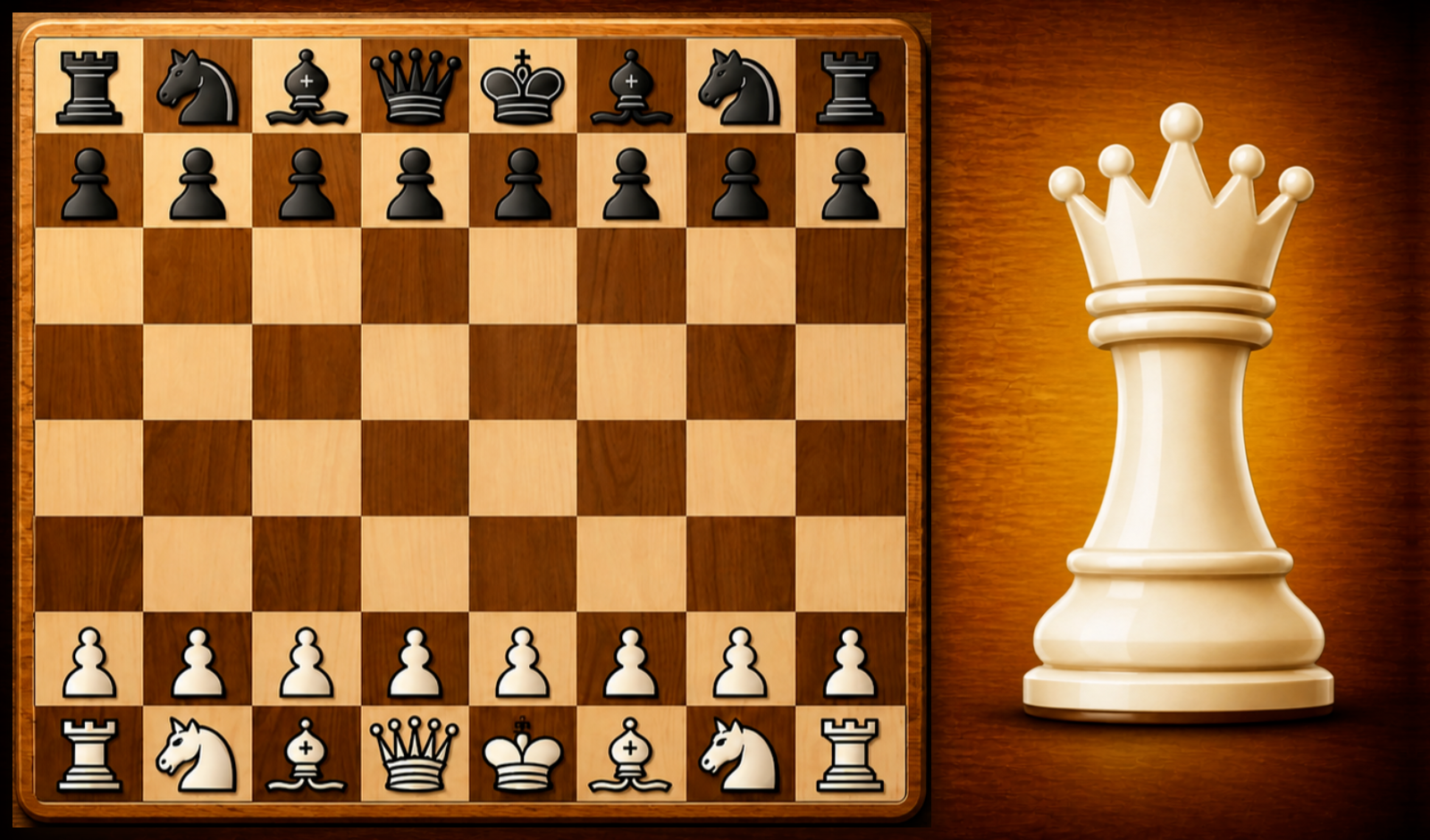
Place an 8×8 board with a light square at each player's near right corner. The back rank is rook, knight, bishop, queen, king, bishop, knight, rook; the queen starts on her own colour. Eight pawns stand in front. White moves first.
Rooks travel along ranks or files; bishops use diagonals; queens combine both. These pieces cannot jump over others. Knights move two squares along one axis and one along the other and can jump. A king moves one square, staying away from attacked squares.
A pawn advances one square, or two from its starting square when the path is clear. It captures one square diagonally forward. On reaching the farthest rank, it promotes to a queen, rook, bishop or knight.
Check attacks the king. Escape with a legal king move, capture the attacker or block its line where possible. A move that leaves your king attacked is illegal. Checkmate means no legal answer to check; stalemate means no legal move without check and is a draw.
Castling moves the king two squares towards a rook and places that rook across it. Neither piece may have moved; the path must be clear and the king cannot start in, cross or finish in check. En passant is a special pawn capture available immediately after a qualifying opposing two-square pawn move.
Before a move, ask which pieces will become undefended and whether your king stays safe. Develop knights and bishops rather than repeatedly moving one piece. Use the link below to practise on our chess board.
Try it in the game
Chess