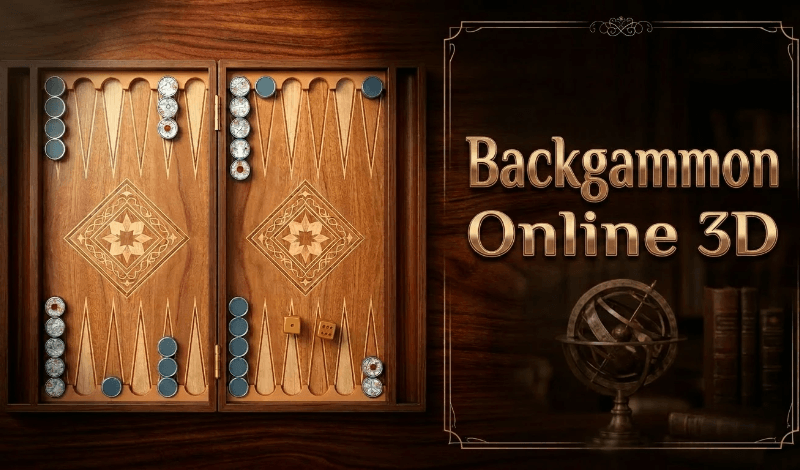
Each player has 15 checkers. Bring them into your home board and bear them off before your opponent. Measured from your own home, the standard setup places two on point 24, five on 13, three on 8 and five on 6. The players travel in opposite directions.
Each die is a separate move. With 3 and 5, you may move two checkers or one checker through both steps. For a combined move, the intermediate landing point must also be legal. Two or more opposing checkers close a point; a lone opposing checker can be hit.
A hit checker goes to the bar. Before moving any other checker, re-enter from the bar into the opponent's home board using a die. A closed entry point blocks that number. If no entry is possible, the unavailable moves are lost.
A double gives four moves of that number. Use both dice whenever legally possible; if either number can be used but not both, use the higher one. With a double, play as many of its four moves as possible.
Bear off only after every checker reaches home. A matching die removes a checker from that point. An oversized die may remove a checker from the highest occupied point when none remains farther away. If a checker is hit during this stage, return it and bring it home first.
Practise by checking the intermediate point before combining two dice and noticing exposed single checkers. The button below opens our shared backgammon collection; choose short backgammon in its menu. This introduction covers checker play; match scoring and the doubling cube are separate agreements.
Try it in the game
Backgammon