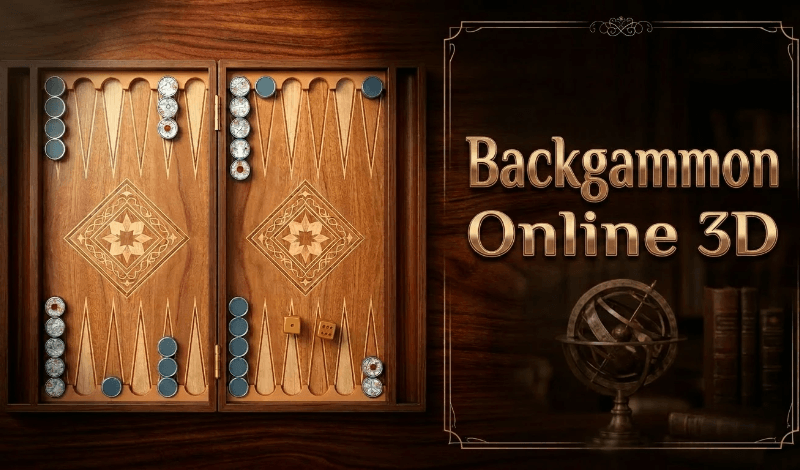
In long nardy, each player's 15 checkers begin on a single starting point called the head. Both sides travel in the same direction around the board. Bring your checkers into the final six points of your route, then bear them off.
Unlike short backgammon, there is no hitting or bar. A point occupied by even one opposing checker is closed. You may land on your own checkers. Each die is a separate step, so moving one checker by both numbers requires a legal intermediate landing.
Normally only one checker leaves the head per turn. On an opening double 3,4 or 6, the starting position can require a second checker to leave because one cannot use all four moves legally. Check the selected rules before applying an opening exception to another position.
Doubles supply four moves of the same size. Play the available dice; the order can determine whether both numbers remain usable. A six-point blockade cannot trap every opposing checker behind it: at least one opponent must already be ahead.
Once all your checkers reach home, a matching die bears off a checker from that point. An oversized die can remove a checker from the farthest occupied point if none remains behind it. Clearing distant home points reduces wasted rolls later.
For your first decision, compare bringing a new checker off the head with advancing one already in play. The button below opens our shared collection; select long nardy in the game. Scoring and tournament variations differ, so this guide introduces ordinary checker movement rather than every competition regulation.
Try it in the game
Backgammon